
Description
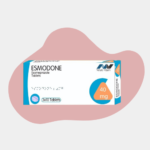
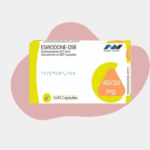
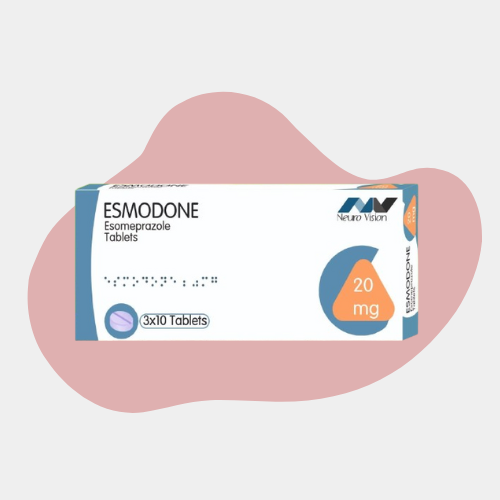
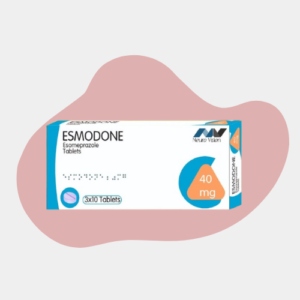
Esmodone 20mg Tablet (Esomeprazole 20mg) – Complete Reference
—
1. Pharmacokinetics
Absorption: Esomeprazole is rapidly absorbed after oral administration, reaching peak plasma concentrations within 1–2 hours.
Distribution: It is highly protein-bound (~97%) in plasma and distributes widely in tissues, especially in the stomach lining.
Metabolism: Esomeprazole undergoes extensive metabolism in the liver via the cytochrome P450 system, primarily through CYP2C19 and CYP3A4 enzymes.
Excretion: The drug is excreted mainly through urine (~80%) as metabolites, with a half-life of approximately 1–1.5 hours.
Special Populations: In patients with liver impairment, the dose should be reduced. The drug has no significant effect on renal function but should be used with caution in severe renal impairment.
—
2. Pharmacodynamics
Class: Proton pump inhibitor (PPI).
Action: Esomeprazole inhibits the proton pump (H+/K+ ATPase) in parietal cells of the stomach, thereby reducing gastric acid production.
Spectrum of Action: Effective in reducing gastric acid secretion, aiding in ulcer healing, and managing acid reflux symptoms.
—
3. Mechanism of Action
Target: Proton pump (H+/K+ ATPase) on the parietal cells of the stomach lining.
Effect: Inhibition of the proton pump results in reduced acid production, promoting ulcer healing and preventing acid reflux.
—
4. Clinical Indications
Gastroesophageal Reflux Disease (GERD): Treatment of erosive esophagitis and symptom relief for heartburn.
Peptic Ulcers: To promote healing of gastric and duodenal ulcers.
Helicobacter pylori Eradication: As part of a combination therapy for H. pylori infection.
NSAID-induced Ulcers: Prevention of ulcers in patients on long-term NSAID therapy.
—
5. Dosage and Administration
Adults:
GERD: 20mg once daily for 4–8 weeks.
Peptic Ulcers: 20mg once daily for 4–6 weeks.
Helicobacter pylori Eradication: Combined with antibiotics as part of a regimen for H. pylori eradication.
NSAID-induced Ulcers: 20mg once daily.
Administration: Take once daily in the morning, preferably before a meal, with a glass of water. Do not crush or chew the tablet. Swallow it whole.
—
6. Precautions
Allergy: Contraindicated in patients with hypersensitivity to Esomeprazole or any of its components.
Liver Impairment: Adjust the dose in patients with severe hepatic impairment.
Magnesium Deficiency: Long-term use may lead to low magnesium levels, which could cause severe cardiovascular and neurological issues.
Pregnancy and Lactation: Use only when necessary in pregnancy (Category C). Caution is advised during lactation as Esomeprazole is excreted in breast milk.
—
7. Warnings
Clostridium difficile-associated Diarrhea: Risk may be increased with prolonged PPI use.
Rebound Acid Hypersecretion: Discontinuation after prolonged therapy may lead to rebound acid secretion.
Kidney Disease: Use with caution in patients with renal dysfunction, especially with prolonged therapy.
—
8. Side Effects
Common: Headache, diarrhea, nausea, abdominal pain, constipation, flatulence.
Serious (rare): Severe allergic reactions (e.g., anaphylaxis), liver enzyme elevation, bone fractures with long-term use, kidney disease, and low magnesium levels.
—
9. Storage and Stability
Storage: Store at room temperature, between 15°C and 30°C, in a dry place and away from direct sunlight.
Shelf-life: 2–3 years.
Note: Keep out of reach of children.
—
10. Overdose Management
Symptoms: Symptoms may include nausea, vomiting, confusion, and drowsiness.
Treatment: Supportive care. There is no specific antidote for overdose. Hemodialysis is unlikely to remove significant amounts of the drug from the body due to high plasma protein binding.
—
11. Additional Notes
Drug Interactions: Esomeprazole may interact with drugs metabolized by CYP2C19 (e.g., clopidogrel) and may reduce the absorption of drugs that require an acidic pH (e.g., ketoconazole).
Monitoring: For long-term use, monitor magnesium levels, liver function, and bone health.
Patient Advice: Avoid alcohol and smoking as they can aggravate acid reflux. If symptoms persist or worsen, consult a healthcare provider.
Reviews
There are no reviews yet.