

Description
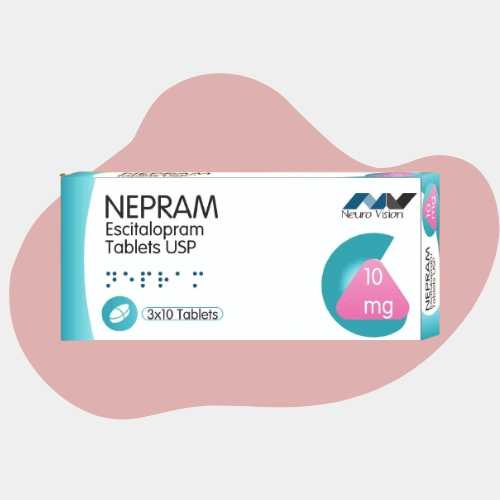
Nepram 10mg Tablet (Escitalopram 10mg) – Complete Reference
—
1. Pharmacokinetics
Absorption: Well absorbed after oral administration. Peak plasma concentration is reached within 3–4 hours.
Distribution: Widely distributed in body tissues; plasma protein binding approximately 56%.
Metabolism: Extensively metabolized in the liver mainly via CYP2C19, CYP2D6, and CYP3A4 enzymes.
Excretion: Eliminated through urine and feces as metabolites.
Half-life: Approximately 27–32 hours, allowing once-daily dosing.
Special Populations: Reduced clearance in elderly patients and those with hepatic impairment; dose adjustment may be required.
—
2. Pharmacodynamics
Class: Selective Serotonin Reuptake Inhibitor (SSRI).
Action: Increases serotonin levels in the central nervous system by inhibiting its reuptake into presynaptic neurons.
Effect: Improves mood, reduces anxiety, and stabilizes emotional balance.
—
3. Mechanism of Action
Escitalopram selectively blocks serotonin (5-HT) reuptake transporters.
This leads to increased serotonin availability in the synaptic cleft, enhancing neurotransmission and improving symptoms of depression and anxiety.
—
4. Specification
Form: Film-coated tablet
Strength: Escitalopram 10mg
Appearance: Round/oval tablet (appearance may vary by manufacturer)
Route: Oral
—
5. Clinical Indications
Major Depressive Disorder (MDD)
Generalized Anxiety Disorder (GAD)
Panic disorder (with or without agoraphobia)
Social anxiety disorder
Obsessive-compulsive disorder (OCD)
—
6. Dosage and Administration
Adults:
10mg once daily; dose may be increased up to 20mg if clinically required.
Elderly:
Start with 5mg once daily; maximum recommended dose is 10mg/day.
Administration:
Can be taken with or without food, preferably at the same time each day.
Treatment Duration:
Several weeks may be required for full therapeutic effect.
—
7. Precautions
Use with caution in patients with:
Hepatic impairment
Renal impairment
Epilepsy
Bipolar disorder
Avoid abrupt discontinuation to prevent withdrawal symptoms.
—
8. Warnings
Suicidal Thoughts: Increased risk in young adults during initial treatment.
Serotonin Syndrome: Risk when combined with other serotonergic agents.
QT Prolongation: Caution in patients with cardiac conditions.
Withdrawal Symptoms: Gradual dose tapering is recommended when stopping therapy.
—
9. Side Effects
Common:
Nausea
Headache
Insomnia or somnolence
Dry mouth
Increased sweating
Fatigue
Serious (rare):
Suicidal ideation
Serotonin syndrome
QT prolongation
Hyponatremia
Seizures
—
10. Drug Interactions
MAO inhibitors (contraindicated)
Other SSRIs or antidepressants
Triptans and serotonin-enhancing drugs
Anticoagulants (increased bleeding risk)
Alcohol (use discouraged)
—
11. Storage and Stability
Store below 30°C
Protect from moisture and light
Keep out of reach of children
Shelf-life: 2–3 years
—
12. Additional Notes
Not habit-forming.
Regular follow-up is recommended during treatment.
Patient Advice: Do not stop medication suddenly; report mood changes, agitation, or suicidal thoughts immediately
Reviews
There are no reviews yet.