
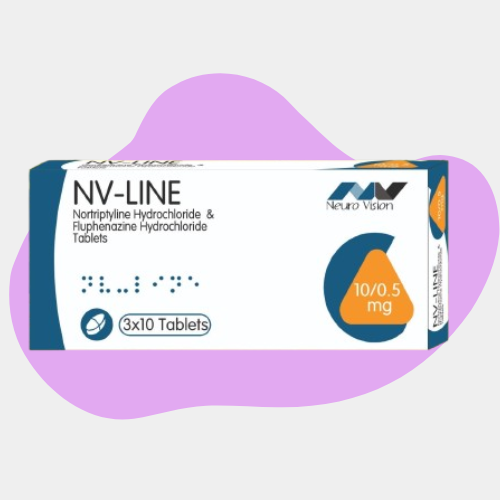
Description
NV-Line 10/0.5mg Tablet –
—
1. Pharmacokinetics
Nortriptyline (10mg)
Absorption: Well absorbed orally; peak plasma levels occur in 6–8 hours.
Distribution: Widely distributed; ~95% plasma protein binding.
Metabolism: Metabolized in the liver via CYP2D6 to active metabolites.
Excretion: Mainly in urine as metabolites.
Half-life: Approximately 18–44 hours.
Fluphenazine (0.5mg)
Absorption: Rapid oral absorption; peak plasma concentration in 1–6 hours.
Distribution: Highly protein-bound; accumulates in tissues including brain and liver.
Metabolism: Extensively metabolized in the liver.
Excretion: Primarily via urine and bile.
Half-life: 15–30 hours.
—
2. Pharmacodynamics
Class: Combination of a tricyclic antidepressant (Nortriptyline) and a typical antipsychotic (Fluphenazine).
Action:
Nortriptyline: Inhibits reuptake of norepinephrine and serotonin, improving mood and emotional balance.
Fluphenazine: Dopamine D2 receptor antagonist, reducing psychotic symptoms like hallucinations and delusions.
Effect: Controls depressive symptoms with psychotic features or agitation.
—
3. Mechanism of Action
Nortriptyline: Enhances noradrenaline and serotonin levels in synaptic clefts to improve mood.
Fluphenazine: Blocks dopamine receptors in the brain to manage psychosis.
—
4. Specification
Form: Film-coated tablet
Strength: Nortriptyline 10mg + Fluphenazine 0.5mg
Appearance: Round/oval tablet
Route: Oral
—
5. Clinical Indications
Depressive episodes with psychotic features
Schizoaffective disorder
Psychotic depression
Chronic depression with agitation or psychomotor disturbances
—
6. Dosage and Administration
Adults: Usually 1 tablet once or twice daily; dose adjusted according to clinical response.
Elderly: Start with lower dose due to increased sensitivity and slower metabolism.
Administration: Take orally, preferably after meals to reduce gastrointestinal upset.
—
7. Precautions
Cardiac conditions (arrhythmias, prolonged QT interval)
Epilepsy or seizure disorders
Glaucoma or urinary retention
Hepatic or renal impairment
Caution in elderly due to anticholinergic effects
—
8. Warnings
Suicidal Risk: Monitor in young adults and depressive patients.
Extrapyramidal Symptoms (EPS): Fluphenazine may cause tremors, rigidity, or tardive dyskinesia.
Serotonin Syndrome: Rare, if combined with other serotonergic drugs.
Withdrawal: Do not stop abruptly; taper under medical supervision.
—
9. Side Effects
Common:
Dry mouth, constipation, blurred vision
Drowsiness or sedation
Weight gain
Orthostatic hypotension
Serious (rare):
Extrapyramidal symptoms (tremor, dystonia)
Neuroleptic malignant syndrome
Cardiac arrhythmias
Seizures
—
10. Drug Interactions
Other CNS depressants or alcohol (increased sedation)
MAO inhibitors (risk of hypertensive crisis or serotonin syndrome)
Anticholinergic drugs (enhanced anticholinergic effects)
CYP2D6 inhibitors may increase Nortriptyline levels
—
11. Storage and Stability
Store below 30°C
Protect from moisture and light
Keep out of reach of children
Shelf-life: 2–3 years
—
12. Additional Notes
Monitor mood, psychotic symptoms, blood pressure, and ECG during therapy.
Regular follow-up is essential for dosage adjustment and side-effect management.
Patient Advice: Report involuntary movements, palpitations, severe sedation, or mood worsening immediately
Reviews
There are no reviews yet.