
Description
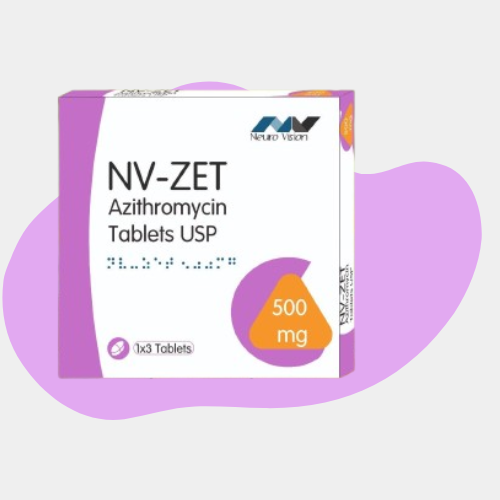
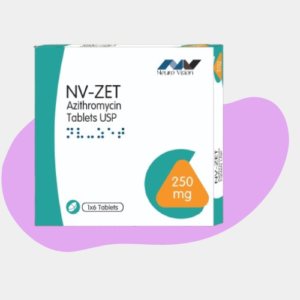
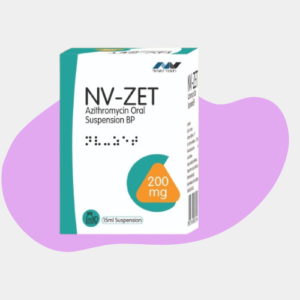
NV-ZET 500mg Tablet
—
1. Pharmacokinetics
Absorption: Rapidly absorbed from the gastrointestinal tract; peak plasma levels in 2–3 hours.
Distribution: Widely distributed in tissues (lungs, tonsils, macrophages); plasma protein binding ~50%.
Metabolism: Partially metabolized in the liver.
Excretion: Mainly via bile; small amounts excreted in urine.
Half-life: ~68 hours, allowing convenient once-daily dosing.
Special Populations: Dose adjustment may be required in severe hepatic impairment; usually not needed in mild/moderate renal impairment.
—
2. Pharmacodynamics
Class: Macrolide antibiotic
Action: Bacteriostatic; inhibits bacterial protein synthesis by binding to the 50S ribosomal subunit.
Effect: Effective against Gram-positive, Gram-negative, and atypical bacteria causing respiratory, skin, and soft tissue infections.
—
3. Mechanism of Action
Azithromycin binds to bacterial 50S ribosomal subunit, blocking protein synthesis and preventing bacterial replication.
Concentrates in tissues and phagocytes, achieving high intracellular activity against pathogens.
—
4. Specification
Form: Film-coated tablet
Strength: 500mg
Appearance: Round or oval tablet, typically pink or red
Route: Oral
—
5. Clinical Indications
Respiratory tract infections: pneumonia, bronchitis, sinusitis, pharyngitis, tonsillitis
Skin and soft tissue infections
Otitis media
Genital infections (e.g., Chlamydia)
Mycoplasma infections
—
6. Dosage and Administration
Adults and children ≥12 years:
Typical regimen: 500mg once daily for 3–5 days (depending on infection type)
Children <12 years: Dose based on body weight (10–12mg/kg once daily, duration as prescribed)
Administration: Take orally with or without food; swallow whole with water.
—
7. Precautions
Avoid in patients with hypersensitivity to azithromycin or other macrolides.
Caution in patients with liver disease or prolonged QT interval.
Monitor for signs of superinfection with prolonged therapy.
—
8. Warnings
Risk of Clostridium difficile-associated diarrhea.
Report severe diarrhea, rash, jaundice, or palpitations immediately.
Avoid combining with drugs that prolong QT interval.
—
9. Side Effects
Common:
Nausea, vomiting, diarrhea
Abdominal pain
Headache
Serious (rare):
Liver dysfunction
Allergic reactions (rash, urticaria, anaphylaxis)
Cardiac arrhythmias
Severe diarrhea due to C. difficile
—
10. Drug Interactions
Antacids may reduce absorption; separate by 2 hours.
May increase levels of warfarin, digoxin, or certain statins.
Avoid concurrent use with QT-prolonging drugs.
—
11. Storage and Stability
Store below 25°C
Protect from moisture and light
Keep out of reach of children
Shelf-life: 2–3 years
—
12. Additional Notes
Complete full course even if symptoms improve.
Suitable for adults and children (dose-adjusted).
Patient Advice: Report severe diarrhea, rash, yellowing of eyes/skin, or palpitations immediately.
Reviews
There are no reviews yet.