
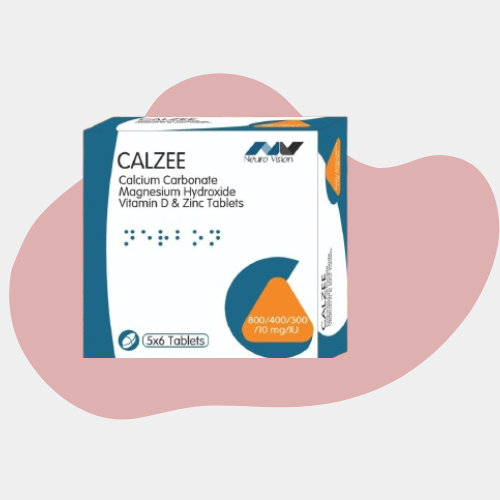
Description
Calzee Tablets –
—
1. Pharmacokinetics
Calcium Citrate (1000mg)
Absorption: Well absorbed from the gastrointestinal tract; absorption is independent of gastric acidity.
Distribution: Distributed primarily to bones and teeth.
Excretion: Excreted through urine, feces, and sweat.
Vitamin D3 (Cholecalciferol 200 IU)
Absorption: Well absorbed from the intestine.
Distribution: Stored in fat tissue and liver.
Metabolism: Converted in the liver and kidneys to its active form (calcitriol).
Excretion: Mainly via bile and feces.
Magnesium (100mg)
Absorption: Absorbed in the small intestine.
Distribution: Stored in bones, muscles, and soft tissues.
Excretion: Primarily through the kidneys.
Zinc (4mg)
Absorption: Absorbed in the small intestine.
Distribution: Widely distributed in tissues, especially muscles and bones.
Excretion: Mainly via feces; small amounts in urine and sweat.
—
2. Pharmacodynamics
Calcium: Essential for bone formation, muscle contraction, nerve transmission, and blood coagulation.
Vitamin D3: Enhances intestinal absorption of calcium and phosphorus, improving bone mineralization.
Magnesium: Supports bone structure, muscle relaxation, and enzymatic reactions.
Zinc: Plays a role in bone metabolism, immune function, and tissue repair.
—
3. Mechanism of Action
Calcium provides structural strength to bones and teeth.
Vitamin D3 improves calcium absorption and utilization.
Magnesium regulates calcium transport and muscle function.
Zinc supports bone growth, collagen synthesis, and immune defense.
Together, these nutrients work synergistically to maintain strong bones and overall mineral balance.
—
4. Clinical Indications
Calcium and Vitamin D deficiency
Osteoporosis and osteopenia
Bone weakness and fracture prevention
Pregnancy and lactation support
Menopausal bone loss
Elderly patients with increased mineral requirements
Muscle cramps related to mineral deficiency
—
5. Dosage and Administration
Adults:
1 tablet once daily or as directed by the physician.
Administration:
Preferably taken after meals with water.
—
6. Precautions
Hypercalcemia or hypervitaminosis D
Renal impairment or kidney stones
Long-term use should be monitored in patients with renal disease
—
7. Warnings
Excessive intake may cause calcium overload.
Avoid concurrent use with other high-dose calcium supplements unless advised.
Monitor serum calcium levels during prolonged therapy.
—
8. Side Effects
Common:
Nausea
Constipation
Abdominal discomfort
Bloating
Rare:
Hypercalcemia
Kidney stones
Metallic taste
Allergic reactions
—
9. Drug Interactions
Reduced absorption when taken with iron, tetracyclines, quinolones (separate dosing by 2–3 hours).
Thiazide diuretics may increase calcium levels.
Magnesium may interact with certain antibiotics.
—
10. Storage and Stability
Store below 30°C
Protect from moisture and direct sunlight
Keep out of reach of children
Shelf-life: 2–3 years
—
11. Additional Notes
Calcium citrate is preferred for patients with low stomach acid.
Suitable for elderly and long-term supplementation.
Regular monitoring recommended in chronic use.
Patient Advice: Do not exceed recommended dose; report symptoms like persistent nausea, vomiting, or muscle weakness
Reviews
There are no reviews yet.