
Description
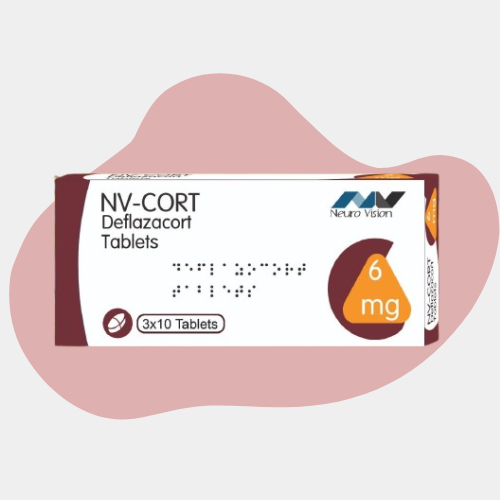
NV-Cort 6mg Tablets (Deflazacort) – Complete Reference
—
1. Pharmacokinetics
Absorption: Rapidly absorbed after oral administration.
Bioavailability: High oral bioavailability.
Distribution: Widely distributed in body tissues; moderate plasma protein binding.
Metabolism: Prodrug converted in the liver to its active metabolite (21-desacetyl deflazacort).
Excretion: Mainly excreted via urine.
Half-life: Approximately 1.5–2 hours.
Special Populations: Dose adjustment may be required in hepatic or renal impairment.
—
2. Pharmacodynamics
Class: Synthetic glucocorticoid.
Action: Anti-inflammatory, immunosuppressive, and anti-allergic.
Potency: Comparable efficacy to prednisolone with relatively less impact on bone metabolism.
—
3. Mechanism of Action
Suppresses inflammatory gene expression by inhibiting cytokines, prostaglandins, and leukotrienes.
Reduces capillary permeability and immune cell migration.
Modulates immune response to decrease inflammation and hypersensitivity reactions.
—
4. Specification
Form: Film-coated tablet
Strength: Deflazacort 6mg
Appearance: White to off-white tablet
Route: Oral administration
—
5. Clinical Indications
Allergic disorders
Bronchial asthma
Rheumatoid arthritis
Autoimmune diseases
Skin diseases (eczema, dermatitis)
Inflammatory bowel disease
Nephrotic syndrome
Muscular dystrophy
Other inflammatory or immunosuppressive conditions
—
6. Dosage and Administration
Adults:
Dose depends on condition and severity (commonly 6–30mg daily).
Pediatrics:
Dose based on body weight and clinical response.
Administration:
Take orally with or after food.
Long-term Therapy:
Use lowest effective dose; taper gradually to avoid adrenal insufficiency.
—
7. Precautions
Use cautiously in diabetes, hypertension, osteoporosis, glaucoma, and peptic ulcer disease.
Increased risk of infections during therapy.
Monitor blood pressure, blood glucose, and bone density with prolonged use.
Vaccination with live vaccines should be avoided.
—
8. Warnings
Adrenal Suppression: Risk with long-term use or sudden withdrawal.
Infection Risk: May mask signs of infection.
Psychiatric Effects: Mood changes, insomnia, or behavioral disturbances possible.
Growth Suppression: Possible in children with prolonged therapy.
—
9. Side Effects
Common:
Increased appetite
Weight gain
Indigestion
Mood changes
Fluid retention
Serious (rare):
Osteoporosis
Cushingoid features
Hyperglycemia
Hypertension
Peptic ulcer
Cataracts or glaucoma
—
10. Drug Interactions
NSAIDs: Increased risk of gastrointestinal bleeding.
Antidiabetics: Reduced glucose-lowering effect.
Diuretics: Increased risk of hypokalemia.
Anticonvulsants: Reduced steroid efficacy.
Vaccines: Reduced immune response.
—
11. Storage and Stability
Store below 25°C
Protect from moisture and light
Keep out of reach of children
Shelf-life: 2–3 years
—
12. Additional Notes
Prefer morning dosing to mimic natural cortisol rhythm.
Gradual dose reduction required after prolonged use.
Patient Advice: Do not stop medication abruptly; report signs of infection, black stools, or vision changes immediately
Reviews
There are no reviews yet.