
Description
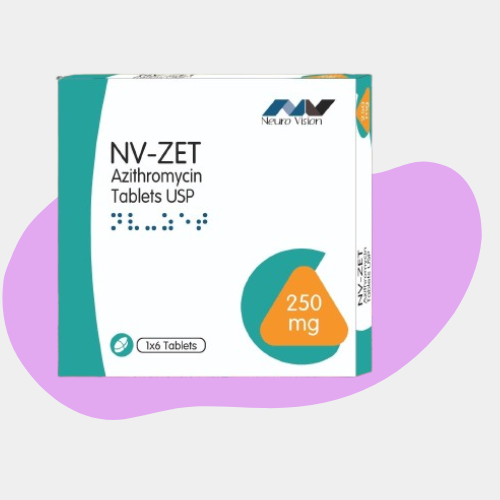
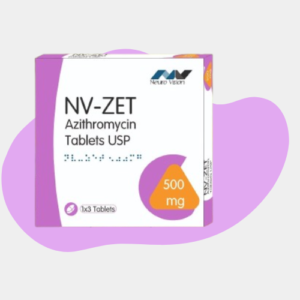
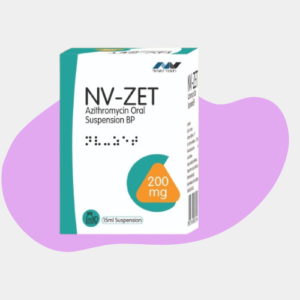
NV-ZET 250mg Tablet
—
1. Pharmacokinetics
Absorption: Rapidly absorbed orally; peak plasma levels occur within 2–3 hours.
Distribution: Widely distributed in body tissues, especially lungs, tonsils, and macrophages; plasma protein binding ~50%.
Metabolism: Partially metabolized in the liver.
Excretion: Primarily via bile; small amounts excreted in urine.
Half-life: Approximately 68 hours, allowing convenient once-daily dosing.
Special Populations: Adjust dose in severe hepatic impairment; no adjustment usually needed for mild to moderate renal impairment.
—
2. Pharmacodynamics
Class: Macrolide antibiotic
Action: Bacteriostatic; inhibits bacterial protein synthesis by binding to the 50S ribosomal subunit.
Effect: Effective against many Gram-positive, Gram-negative, and atypical bacteria causing respiratory, skin, and soft tissue infections.
—
3. Mechanism of Action
Azithromycin binds to the 50S subunit of bacterial ribosomes, inhibiting protein synthesis and preventing bacterial replication.
Concentrates in tissues and phagocytes, achieving high intracellular levels against pathogens.
—
4. Specification
Form: Film-coated tablet
Strength: 250mg
Appearance: Round or oval tablet, usually pink or red
Route: Oral
—
5. Clinical Indications
Respiratory tract infections: pneumonia, bronchitis, sinusitis, pharyngitis, tonsillitis
Skin and soft tissue infections
Otitis media
Genital infections (e.g., Chlamydia)
Mycoplasma infections
—
6. Dosage and Administration
Adults and children ≥12 years:
Typical dose: 500mg on day 1, followed by 250mg once daily for 4 more days
Children <12 years: Dose calculated based on body weight (10mg/kg on day 1, then 5mg/kg once daily for 4 days)
Administration: Take orally with or without food; swallow tablets whole with water.
—
7. Precautions
Avoid in patients with known hypersensitivity to azithromycin or other macrolides.
Use cautiously in patients with liver disease or cardiac conditions (risk of QT prolongation).
Monitor for signs of superinfection with prolonged use.
—
8. Warnings
Risk of Clostridium difficile-associated diarrhea with prolonged therapy.
Monitor for severe diarrhea, rash, jaundice, or palpitations.
Use with caution in patients taking drugs that prolong QT interval.
—
9. Side Effects
Common:
Nausea, vomiting, diarrhea
Abdominal pain
Headache
Serious (rare):
Liver dysfunction
Allergic reactions (rash, urticaria, anaphylaxis)
Cardiac arrhythmias
Severe diarrhea due to C. difficile
—
10. Drug Interactions
Antacids may reduce absorption; take antacids 2 hours before or after azithromycin.
May increase levels of warfarin, digoxin, and certain statins.
Avoid concurrent use with other drugs that prolong QT interval.
—
11. Storage and Stability
Store below 25°C
Protect from moisture and light
Keep out of reach of children
Shelf-life: 2–3 years
—
12. Additional Notes
Complete the full course of therapy even if symptoms improve.
Suitable for adults and children (dose-adjusted).
Patient Advice: Report severe diarrhea, rash, yellowing of eyes/skin, or palpitations immediately
Reviews
There are no reviews yet.