
Description
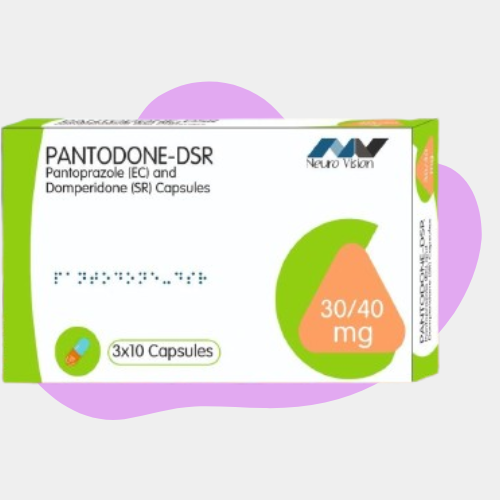
Pantodone DSR Capsule
1. Pharmacokinetics
Pantoprazole 40mg ER
Absorption: Rapidly absorbed orally; bioavailability ~77%.
Distribution: Widely distributed; ~98% plasma protein binding.
Metabolism: Hepatic metabolism via CYP2C19.
Excretion: Primarily in urine (~71%) and feces (~18%).
Half-life: 1–2 hours; prolonged action due to enteric coating.
Domperidone 30mg SR
Absorption: Well absorbed; peak plasma concentration in 3–4 hours (sustained release).
Distribution: ~91–93% plasma protein binding.
Metabolism: Hepatic metabolism via CYP3A4.
Excretion: Mainly via urine and bile.
Half-life: 7–9 hours (sustained release formulation).
—
2. Pharmacodynamics
Class: Proton pump inhibitor (Pantoprazole) + Dopamine antagonist (Domperidone)
Action:
Pantoprazole: Inhibits gastric acid secretion by blocking H+/K+ ATPase in parietal cells.
Domperidone: Increases gastrointestinal motility and accelerates gastric emptying; antiemetic effect.
Effect: Reduces acid-related symptoms and relieves nausea, vomiting, and bloating.
—
3. Mechanism of Action
Pantoprazole: Binds to gastric parietal cells’ proton pumps, suppressing basal and stimulated gastric acid secretion.
Domperidone: Blocks dopamine D2 receptors in the chemoreceptor trigger zone and GI tract, enhancing motility and reducing nausea/vomiting.
—
4. Specification
Form: Capsule, Extended/Sustained Release
Strength: Pantoprazole 40mg ER + Domperidone 30mg SR
Appearance: Two-in-one capsule, usually bicolored
Route: Oral
—
5. Clinical Indications
Gastroesophageal reflux disease (GERD)
Peptic ulcer disease (duodenal or gastric ulcer)
Gastritis and dyspepsia
Nausea and vomiting associated with delayed gastric emptying
Zollinger-Ellison syndrome (acid hypersecretion)
—
6. Dosage and Administration
Adults: 1 capsule once daily, 30 minutes before meals, or as prescribed by a physician
Administration: Swallow whole; do not crush or chew.
Duration: As advised by healthcare professional; usually 2–8 weeks for GERD or ulcers
—
7. Precautions
Hepatic or renal impairment: Use with caution
History of cardiac arrhythmias: Monitor for QT prolongation
Not recommended for children under 12 years without medical advice
—
8. Warnings
May mask symptoms of gastric malignancy; rule out cancer if persistent symptoms
Rare risk of severe arrhythmias with domperidone in high doses or cardiac disease
Long-term PPI therapy may increase risk of vitamin B12 deficiency, hypomagnesemia, or bone fractures
—
9. Side Effects
Common:
Headache, dizziness
Abdominal pain, diarrhea, constipation
Nausea or bloating
Serious (rare):
Liver enzyme elevation (Pantoprazole)
QT prolongation, palpitations (Domperidone)
Allergic reactions (rash, swelling, anaphylaxis)
—
10. Drug Interactions
Pantoprazole may reduce absorption of drugs requiring acidic pH (ketoconazole, atazanavir)
Domperidone may interact with QT-prolonging drugs, CYP3A4 inhibitors, or antifungals
Avoid concurrent use with other prokinetic or antiemetic drugs unless prescribed
—
11. Storage and Stability
Store below 25°C
Protect from light and moisture
Keep out of reach of children
Shelf-life: 2–3 years
—
12. Additional Notes
Take 30 minutes before meals for optimal acid suppression
Do not exceed recommended dose; seek medical advice for persistent or worsening symptoms
Patient Advice: Report severe abdominal pain, persistent vomiting, jaundice, or irregular heartbeat immediately
Reviews
There are no reviews yet.